From Sketch to Production in 8 Hours
Mar 18, 2026 • Michael Montanaro • 3 min read
112 Hours of Engineering Completed Autonomously
My sketch would not have come to life without Blitzy. Our development team would still be fumbling around a clunky user interface, losing minutes to hours a week, one request at a time.
We use an admin portal to interact with specific workflows that arise with need. Given the nature of startups, priorities for user experience improvements to internal tools are low within the typical engineering sprint. Nonetheless, a revision was needed, and that very question was keeping me up one Friday night as I thought of ways to enable our team to be more efficient. Pen in hand, I scribbled a rectangle with a few boxes and a top search bar, labelling the components as I envisioned them.
What could Blitzy create with my scribbles? I wrote a prompt and submitted a screenshot of my Friday night sketch to the platform.
Creativity fuels my side projects and often takes a backseat to official engineering tasks. The culprit is a lack of time and energy keeping me from innovating. Blitzy allows me to parallelize my work across multiple applications and even take on weekend projects like the UI. By stacking productivity in any organization, the autonomous stream of code generation allows for an exponential return on engineering value previously unavailable to human development alone.
How Blitzy Handles Code Context
The platform works best with more context and, having already ingested 12.1+ million lines of our production codebase, developed real-time understanding prior to starting. Blitzy leverages a dynamic knowledge graph to map the connections, including every line-level dependency. The graph ensured a cohesive Agent Action Plan (AAP) that guided the agents to generate my new functionality, validate, and end-to-end test both backend logic and frontend behavior.
The Results
8 hours and 6,700 lines later, Blitzy had parallelized 112 engineering hours worth of end-to-end validated code across 22 files.
All 87 TypeScript files compiled with 0 errors. 119 automated tests ran across 7 test suites covering state persistence, search behavior, modal logic and keyboard navigation. Every test passed and functionality worked straight from Blitzy.
I did not break anything!
Below are some images of the dashboard:
Old version:
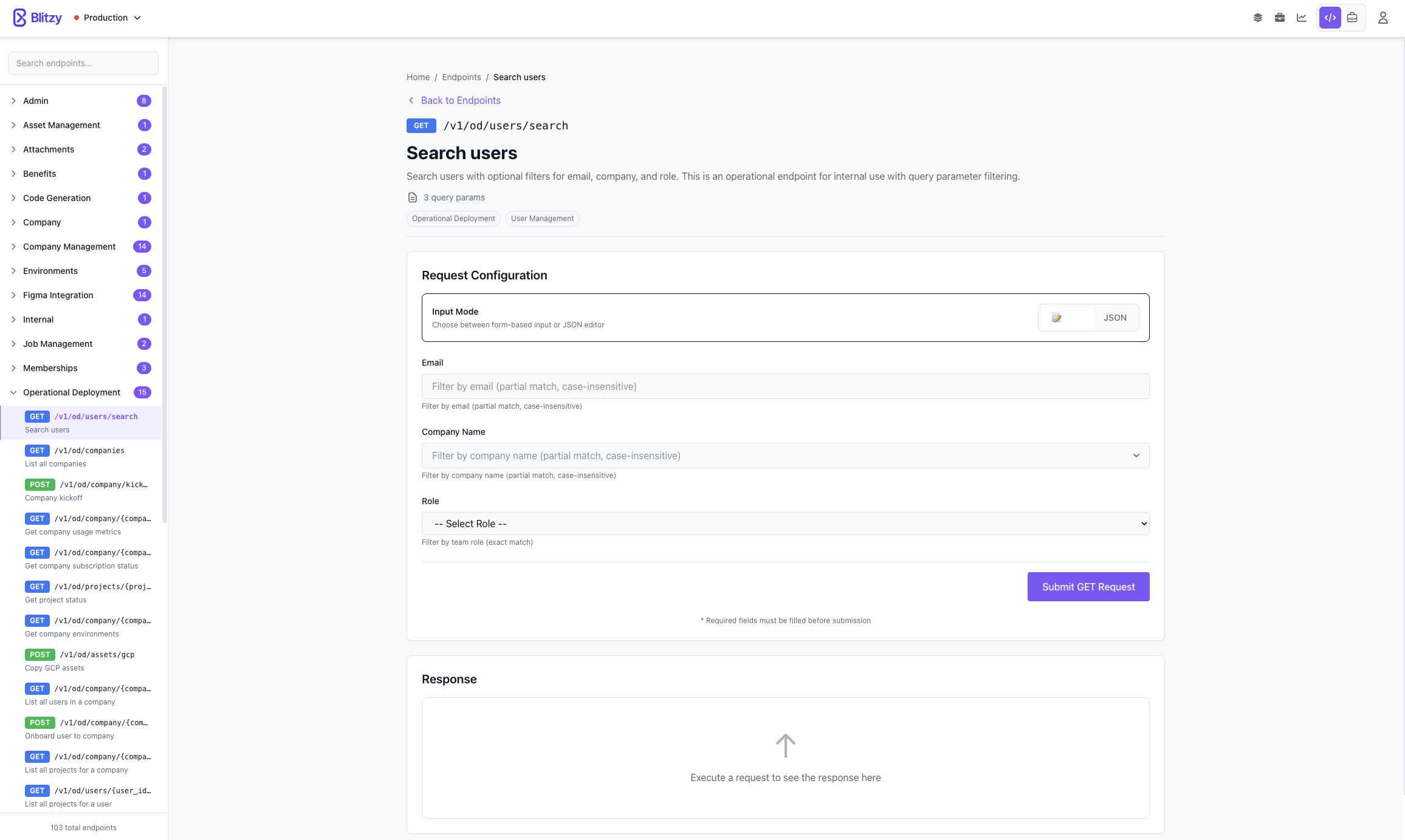
New version:
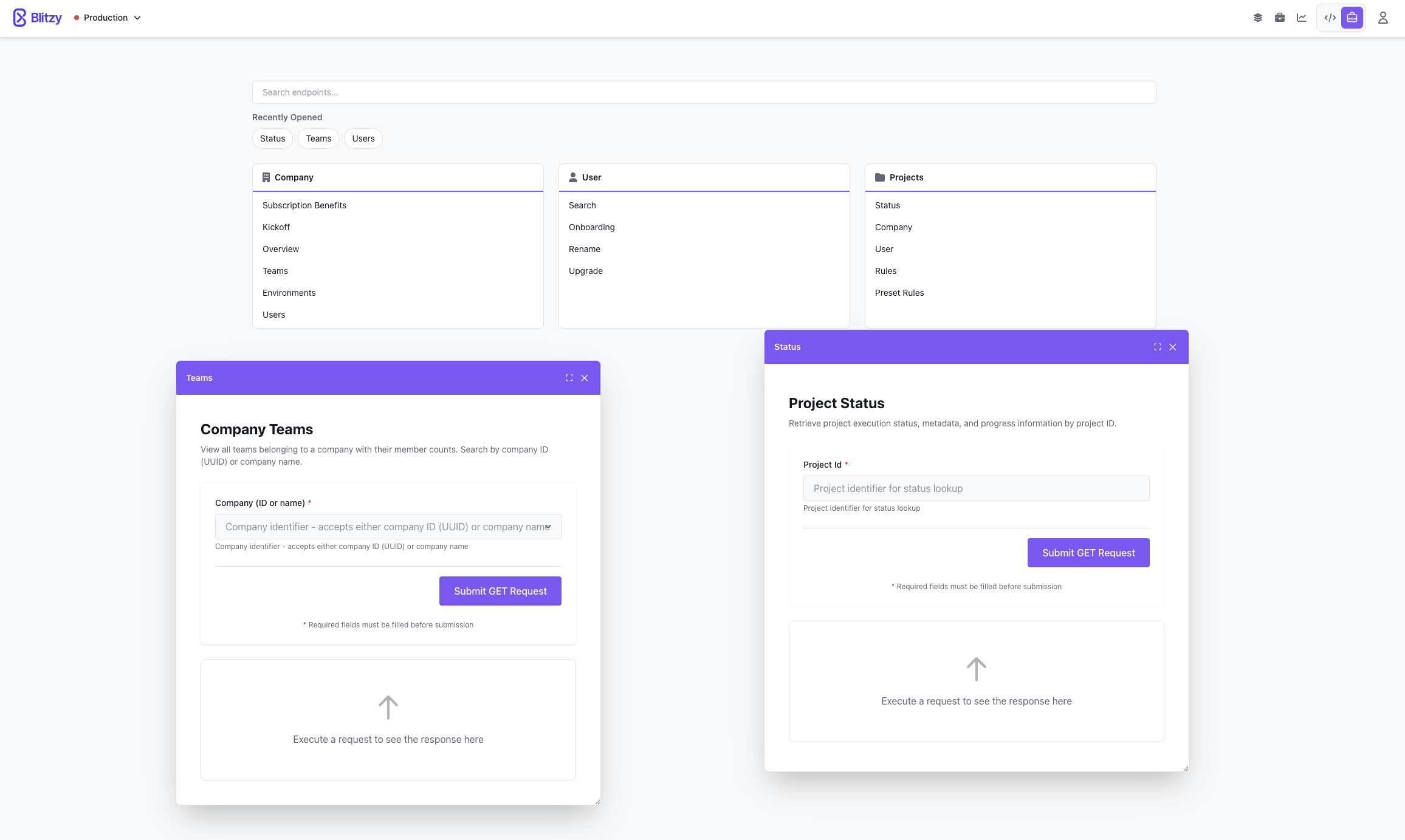
Blitzy built a complete workspace shell with category cards for productivity, a search bar for easier navigation, and a full overlay modal system with support for:
- Dragging
- Keyboard navigation
- Stacking multiple modals
The platform produced the state management layer that persists form inputs across refreshes and wrote the config files mapping each card to the corresponding backend operation. Three existing files, the app entry point, the layout component, and the styling config for modal z-index layering, were modified to wire everything together.
The Review Process
The next morning, armed with vim and a bowl of cereal, I spent 30 minutes preparing the PR for deployment. So far, the work has been 15 minutes for the initial sketch, another 15 minutes of prompting, and a final 30 minutes of styling clean up post-Blitzy run.
112 of 113 hours of the whole process was completed autonomously by Blitzy overnight.
When the pull request was raised Monday morning, many teams would have had their first meeting on this UI overhaul. Ours was ready for production. After a quick round of QA, the changes were pushed, and the team immediately benefited from the UX improvements.
Implications
What I did that weekend would have normally taken development weeks. In the traditional software development lifecycle, every standup, design review, sprint retro and Jira ticket exists to compensate for the fact that codebases are beyond human scale. This coordination has significant costs: time, money, attention and creativity.
Building with Blitzy, however, buys back that time.
Co-pilot tools generate code and reduce individual engineering pains within existing SDLCs without questioning whether the workflow is optimal for AI-native software development. Blitzy holds global context for organizations, which allows the coordination overhead to disappear altogether. Teams like mine can focus on innovation, cohesion, and system design instead of fighting the technical confines of the structured traditional lifecycle.
Blitzy widens these gaps every sprint. What will the next weekend prompt create?
Curious what you could build with Blitzy? Let's chat.