How Blitzy Optimized Our GTM Team
Jun 04, 2026 • Carly Levinsohn • 3 min read
According to ZoomInfo's 2025 GTM Intelligence Report, the average B2B team relies on tools from 23 different vendors. For instance, pipeline may be in a CRM, spend in an ad platform, ROI in a spreadsheet, among others. The sheer volume of portals causes employees to spend more time stitching infrastructure together instead of making sales.
Beyond the cognitive overload, there's an even more obvious problem with this system: there's no single source of truth about an account.
Blitzy GTM engineer Sam McGeachie wondered: how could Blitzy build an internal dashboard called "GTM Hub" that reflects consolidated data across deal management, customer operations, and marketing analytics?
What Blitzy Built
The platform delivered a multi-area expansion of our GTM team's Next.js 14 and Supabase dashboard. The project entailed:
- Ten additive migrations
- Four third-party integrations
- Rebuilt New Business, Customer Operations, and Marketing surfaces, without breaking the surrounding application
With a Figma run using Blitzy and the Blitzy OS Design System, the GTM Hub looks and feels like part of Blitzy's unique ecosystem. The work landed as three workflows integral to our GTM team, each aimed at a different part of the organization.
One place to run every deal
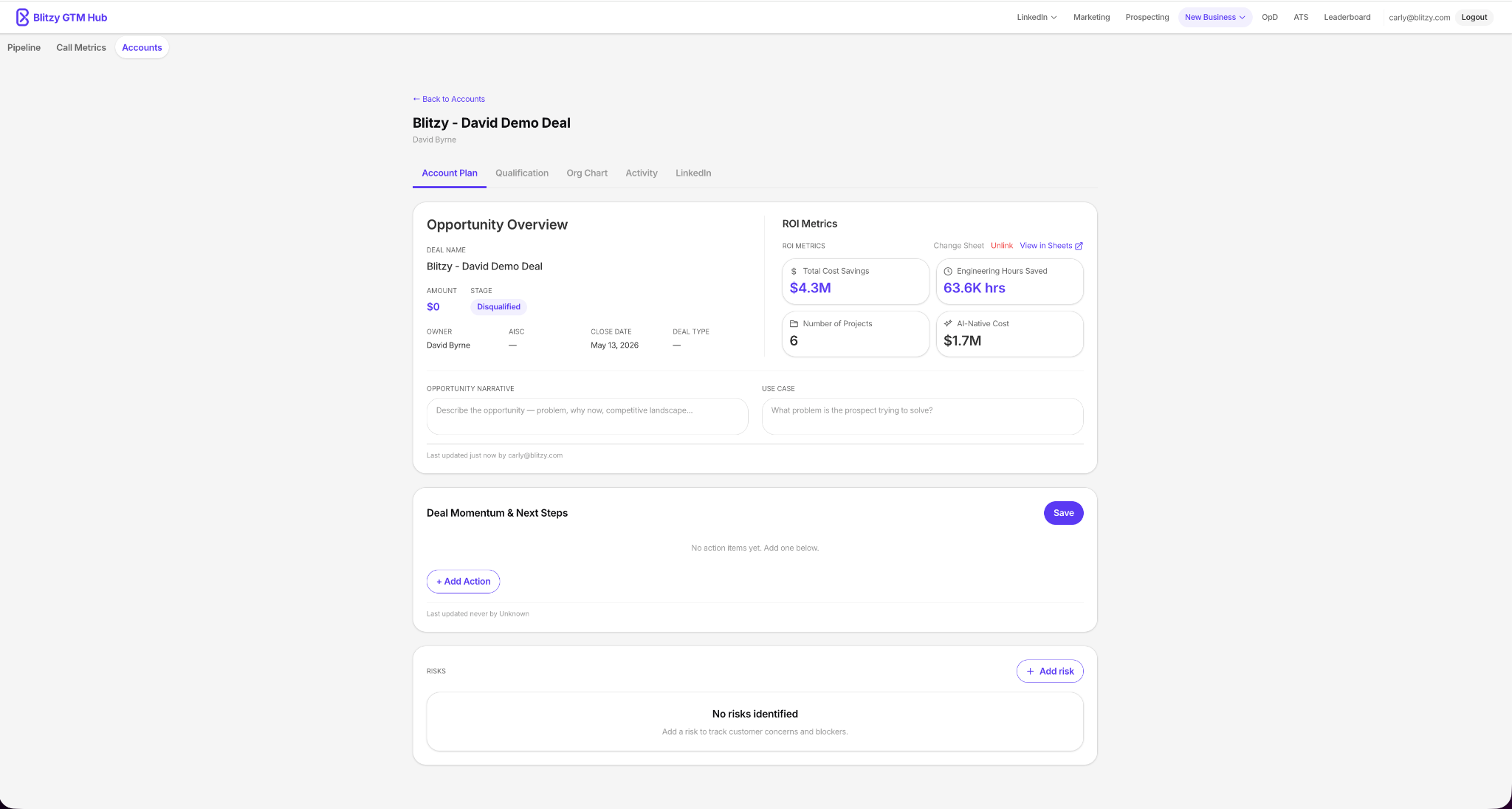
Blitzy migrated the sales pipeline onto a new multi-stage model while preserving full history through an old/new toggle, so the team lost zero visibility into past deal states. The flat deal list became a structured account workspace: one card per deal opening into a set of standardized sections, edited inline through a rich-text interface with auto-expanding fields, debounced auto-save, and server-side authorship on every change so edits stay auditable and tamper-resistant.
The image below depicts an example of what a deal would look like in our GTM Hub:
Every meeting and call in one timeline
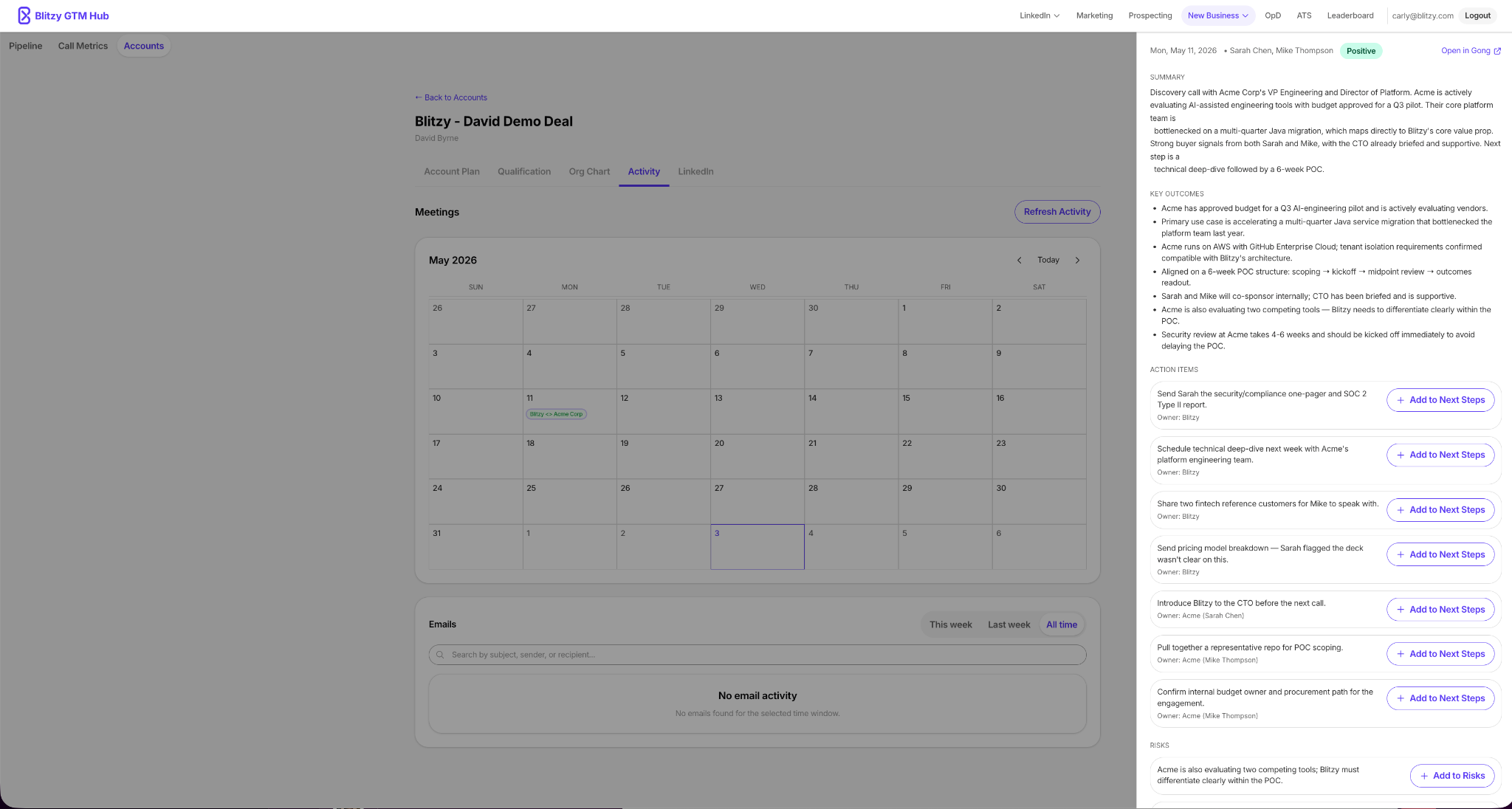
A new activity view merges scheduled meetings with call-intelligence data into a single monthly calendar, automatically reconciling duplicate records and favoring the richer source. Opening any entry surfaces its summary, outcomes, action items, and risks, and a single click promotes those into the account workspace as independent, editable items. Contacts captured in the workspace flow automatically into an interactive relationship map, deduplicated on entry, so anyone inheriting a deal can reconstruct its history and stakeholders in minutes.
The meetings calendar is also integrated into the dashboard. The picture beneath shows how a demo meeting is rendered in GTM Hub:
Spend and ROI in one executive view
A new marketing overview anchors leadership reporting with a dual-axis weekly chart pairing total spend against a toggled performance metric, normalized to consistent week boundaries. Where the underlying data had no documented structure in the codebase, Blitzy discovered the schema at runtime and built directly against the real data. A spreadsheet integration feeds live ROI figures into the relevant deal and customer pages, cached server-side and architected to keep credentials off the client entirely.
Inverting the Economics of Internal Features
The given Building with Blitzy story is atypical for one specific reason. This project inverts the sequence of how internal features are usually built.
Usually, a GTM engineer would file a request, engineers scope the work, where the tool would join a backlog. There, the functionality would wait to be built behind revenue-driving features until there's flexibility one quarter (if ever).
Here, the order ran backwards.
Blitzy GTM engineer Sam wrote the tech spec in a Blitzy prompt. Our platform returned the software in roughly a week. Specification and execution collapsed into a single step owned by the team that needed the result.
Internal tools like Blitzy's GTM Hub are often deprioritized because of their perceived lack of ROI. Every hour spent creating this dashboard is one not spent on features with a clear connection to revenue streams. While the engineering costs required for an internal feature is visible and immediate, the hidden cost of not building GTM Hub is concealed in the lost hours reps lose every week.
Blitzy bought back time for engineers to continue shipping revenue-driving features, all while enhancing the efficiency of internal processes.
Want to see what Blitzy could build in your backlog? Book a call with us here.